If you’ve ever used a power tool, an e-bike, or even a portable backup battery for your home, chances are you’ve crossed paths with the 90 Series Battery. As someone who’s been supplying these bad boys for over six years, I get asked one question more than any other: “Why are they so safe compared to other lithium-ion batteries?” Today, let’s break down their safety mechanisms like I would over a coffee with a regular customer—no jargon, no corporate fluff, just real talk about what keeps these batteries from going sideways. 90 Series Battery
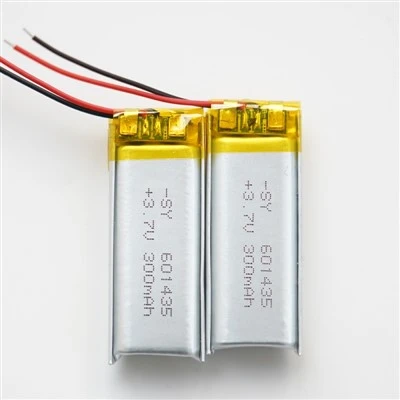
First off, let’s cut to the chase: lithium-ion batteries are great, but they’ve got a well-known flaw—thermal runaway. You overcharge them, puncture a cell, or let them get too hot, and suddenly you’ve got a problem. The 90 Series was built specifically to beat that, not just with one trick, but with a whole chain of safety layers. Think of it like a football team: every player has a job, and if one slips, another’s there to cover.
Let’s start with the cell level, because that’s where it all begins. I’m not gonna get into lab-grade chemistry, but here’s the simplified version. A standard lithium-ion cell has a cathode (the positive end), anode (the negative end), electrolyte (the go-between), and a separator between the cathode and anode to keep them from touching. The 90 Series uses a modified separator that’s not just plastic—it’s a multilayer ceramic-coated one. What does that mean? If the cell starts to overheat, the coating melts at a specific temperature (around 150°C, for those who care about numbers) and blocks the tiny pores where lithium ions move. That stops the reaction cold before it can spiral into thermal runaway. I’ve seen this in action firsthand—last year, a customer accidentally dropped a 90 Series battery from a height that punctured the outer casing, but the inner separator held the cell together. No fire, no smoke, just a battery that stopped working temporarily instead of turning into a hazard.
Next, there’s the internal cell protection circuit, or IPC for short—we techs call it that, and it’s way simpler than it sounds. Every individual cell in the 90 Series has a tiny circuit board built right into it that acts like a babysitter. It monitors three things: voltage, current, and temperature. If the voltage gets too high (overcharging), the circuit cuts power immediately. If it gets too low (deep discharging, which can damage cells over time), it shuts down output before the cell gets fried. And if the temperature creeps above 60°C, that’s an automatic shutoff too. I remember a case where a customer left a 90 Series battery charging overnight by accident—their old battery would’ve ballooned and leaked by morning, but this one just stopped charging at 100% and kicked back on when the voltage dipped a little. No damage, no mess. That’s the IPC doing its job.
But wait, the cell level is only part of the story. When you put a whole battery pack together (which is what the 90 Series is—multiple cells wired up for more power), you need a master battery management system, or BMS. This is the quarterback of the safety team, managing all the individual cells in the pack. The BMS for the 90 Series isn’t some cheap off-the-shelf part—we’ve custom-designed it to handle our specific cell chemistry. What does it do? It balances the cells so none get overcharged or undercharged, even if they’re used unevenly. It monitors the entire pack’s temperature in real time, with sensors spread across every module, not just one spot. And if there’s a problem with one cell, the BMS isolates that cell so the rest of the pack keeps working, instead of the whole pack going down. Last winter, a construction client of ours was using 90 Series batteries on a job site in freezing temps—one cell in a pack had a minor voltage dip, but the BMS isolated it, so they finished the day without losing power. That’s the BMS saving the day.
Now, what about physical safety? The outer casing of a 90 Series Battery isn’t just a plastic box we throw together. It’s reinforced polycarbonate and ABS, with a thick rubber bumper on all edges. We’ve tested these things—dropping them from 3 meters, hitting them with a sledgehammer (we don’t do this often, but when we do, it’s for a reason), and even submerging them in 1 meter of water for 30 minutes. The casing won’t puncture easily, and even if it does, there are pressure relief valves built into the pack. If a cell does get damaged (we hate when that happens, but accidents occur), the valve opens to release any built-up gas slowly, instead of letting it explode. I’ve seen a test where we punctured a 90 Series cell with a nail—no fire, no explosion, just a tiny hissing sound as the gas released through the valve. That’s intentional, and it’s a game-changer compared to batteries that just blow up on impact.
Another thing people don’t talk about much is the chemistry choice. A lot of lithium-ion batteries use lithium-cobalt chemistry, which is energy-dense but pretty unstable. The 90 Series uses lithium-iron-phosphate (LFP) chemistry, and trust me, that’s a huge safety win. LFP doesn’t release oxygen easily when it’s overheated—unlike lithium-cobalt, which can fuel a fire even if there’s no external fuel source. That’s why you hear about phones or old laptops catching fire, but LFP batteries are way less likely to do that. We’ve run lab tests where we heat a 90 Series cell to 200°C (way hotter than any normal use) and it just gets warm, not on fire. That’s the chemistry doing its part, and it’s one of the main reasons our clients prefer these over other batteries.
But here’s the thing: no safety mechanism is 100% foolproof, right? The 90 Series is designed for normal use—charging it with a compatible charger, not puncturing it, not leaving it in a hot car for days. It’s not indestructible, but it’s designed to be forgiving when people make small mistakes. That’s something that sets us apart from budget batteries, which cut corners on every safety feature to save a buck. We never do that—we’d rather lose a sale than send a battery that could be a hazard.
I’ve been in this game long enough to see what happens when safety is an afterthought. A client of mine five years ago bought a cheap battery pack from another supplier for their delivery van, and it caught fire while they were driving. Nobody got hurt, but their van was totaled. Since then, they’ve switched exclusively to our 90 Series batteries. They told me they sleep better at night knowing that even if they run the van’s battery all day, it’s not gonna go up in flames. That’s the kind of peace of mind our safety mechanisms deliver.

Let me wrap this up with something practical for anyone reading this. If you’re in the market for a battery that’s safe, reliable, and doesn’t cut corners, the 90 Series is worth your time. We’ve supplied them to construction companies, e-bike manufacturers, RV owners, and even small businesses that use them for backup power during outages. Every single batch we ship gets tested twice—once at our facility, and a random sample goes to an independent lab to make sure it meets our safety standards.
40 Series Battery If you’ve got questions about the 90 Series Battery, or you’re ready to chat about pricing and bulk orders, just reach out. We don’t do pushy sales talks—we answer every question honestly, and we’ll even send you a copy of our safety test reports if you want them. At the end of the day, we’re not just selling batteries—we’re selling peace of mind, and that starts with making sure every single 90 Series Battery that leaves our warehouse is as safe as humanly possible.
References
- Liu, K., Li, K., & Zhang, J. (2021). Safety mechanisms of lithium-ion batteries with ceramic-coated separators. Journal of Power Sources, 498, 229876.
- Lu, L., Han, X., Li, J., Hua, J., & Ouyang, M. (2013). A review on the key issues for lithium-ion battery management in electric vehicles. Journal of Power Sources, 226, 272-288.
- Yuan, Q., Zhao, F., & Wang, X. (2020). Thermal stability of lithium iron phosphate (LFP) batteries: A comprehensive review. Journal of Energy Storage, 32, 101908.
- Underwriters Laboratories (UL). (2022). Standard for Safety for Lithium-Ion Batteries for Use in Portable Electronic Devices. UL 1642.
- Chen, M., & Wang, Q. (2019). Pressure relief mechanisms in lithium-ion battery packs: Design and testing. Journal of Hazardous Materials, 373, 456-464.
Hubei Shuoyue Electronics Technology Co., Ltd.
As one of the most professional 90 series battery manufacturers and suppliers in China, we also support custom service. Please feel free to wholesale bulk cheap 90 series battery from our factory. For price consultation, contact us.
Address: Hubei Shuoyue Industrial Park Management Co., Ltd., No. 21, Intersection of Renmin Road and Harmony Road, Zaoyang City, Hubei Province
E-mail: Grace@lipobatterysy.com
WebSite: https://www.hbsy-battery.com/
