If you’ve ever wandered through a boutique bedding shop or flipped through a curated quilting catalog, you’ve probably noticed: not all quilts look the same. Some are stitched with bold, repeating patterns that have a subtle, almost three-dimensional depth, while others feature simpler designs that sit flat against the fabric. As someone who’s been a Jacquard quilt supplier for over a decade, I get asked this question all the time: what makes a Jacquard quilt different from every other quilt on the market? It’s not just the fancy name on the label, or the intricate floral designs you might see on a display shelf. The difference is rooted in how the fabric is made, how the pattern is integrated into the material, and the way that translates to a quilt that feels different to use, look at, and even care for. Today, I want to break that down, from the workshop where our Jacquard fabric is woven, to the guest room where one of our quilts might end up on a customer’s bed. Jacquard Quilt
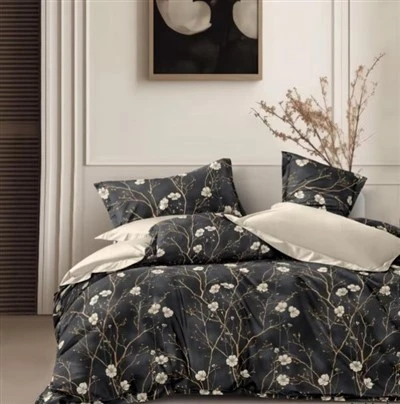
Let’s start with the most basic, often misunderstood part: what “Jacquard” actually means. Most people assume it’s just a fancy term for a patterned quilt, but that’s not true at all. A Jacquard quilt is defined by its base fabric being woven on a Jacquard loom—a invention that dates back to the early 1800s, perfected by a French weaver named Joseph Marie Jacquard, but still the backbone of high-end textile production today. Traditional looms work by lifting warp threads (the vertical threads stretched taut on the loom) in specific sequences to create a pattern, one small section at a time. But a Jacquard loom uses a system of punch cards (now digital software, for modern looms) that control every single warp thread, down to individual yarns, to create a pattern that’s built right into the fabric itself. That’s the key difference between a Jacquard quilt and other quilts: the pattern isn’t printed on top of the fabric, it’s woven into it.
Think about that for a second. If you have a quilt with a printed pattern, the design is applied with ink or dye after the fabric is already woven. Over time, with washing, that ink can fade, crack, or peel, especially if the print isn’t done with high-quality, reactive dye. And if you run a printed quilt through a hot dryer, you might notice the pattern starts to wash out after just a few uses. A Jacquard quilt? The pattern is part of the yarns themselves. Different colored threads are woven together, so when you run your hand over a Jacquard quilt, the pattern has texture—you can feel the design, not just see it. That depth isn’t just a cosmetic thing; it’s a functional detail that makes the quilt feel richer, more intentional, and more durable.
I’ll give you an example from our own production line. Last year, we worked on a line of Jacquard quilts for customer homes that love neutral, understated designs: soft oatmeal, sage, and warm taupe. The pattern was a subtle floral vine, but it wasn’t printed. We wove dark taupe yarns as the “leaves” and light cream yarns as the “vines” into an oatmeal base. When you look at that quilt, it doesn’t look like a stark, flat pattern—depending on how the light hits it, the vines will stand out a little more, and the leaves will have a slight raised edge from the way the threads were woven. A printed version of that same pattern would be smooth, no texture, and after a dozen washes, that taupe leaf dye would start to dull. Our Jacquard version? We’ve had customers tell us they’ve had that same quilt for three years, washed it dozens of times, and the pattern still looks as crisp as the day it arrived. That’s a huge part of what makes our Jacquard quilts different.
Another point that often comes up with customers: the variety of patterns you can get with Jacquard weaving. Because the loom controls each individual warp thread, you can create almost any design you want—from delicate, intricate paisleys to bold, geometric patterns that would be almost impossible to print without looking cheap or fuzzy. Other quilts might rely on appliqué or embroidery to add texture, right? Appliqué is when you cut separate pieces of fabric and stitch them onto a base quilt. Embroidery is when you thread a needle and stitch patterns onto the fabric. Both of those take a lot of hand labor, which makes quilts more expensive, and both can wear out over time—appliqué pieces can come loose, embroidery threads can fray. With Jacquard weaving, the pattern is part of the fabric, so there’s no stitching to come undone, no pieces to pull off. That makes the quilt more durable, and the production is more consistent, so every quilt that leaves our workshop has the exact same pattern, the same texture, as the last one.
Let’s talk about how that translates to everyday use, too. If you’ve ever wrapped yourself in a thin, flat printed quilt, you know it can feel a little one-note. A Jacquard quilt has weight to it, without being heavy or bulky. The woven pattern adds a subtle stiffness to the fabric, which makes the quilt hold its shape, instead of crumpling into a flat heap on the end of the bed. We get a lot of feedback from customers who use our Jacquard quilts as year-round bedding—they’re light enough for summer, when you just want a layer over your sheets, but thick enough and warm enough for winter, when you need an extra layer under your comforter. That’s because the weave of the Jacquard fabric is tighter than the fabric used for most printed quilts. Printed fabrics are often lightweight, loosely woven to make the dye sink in evenly, but Jacquard fabric is woven with tighter, stronger threads, which makes the quilt more breathable, too. You don’t wake up sweaty if you use a Jacquard quilt on a warm night, which is a big plus over thicker, heavier quilts that trap heat.
I also want to address a common misconception that Jacquard quilts are only for luxury bedrooms, or that they’re too expensive for the average shopper. Yes, high-end Jacquard quilts have a higher upfront cost than basic printed quilts, but when you do the math, they’re actually a better value over time. A printed quilt might cost $50, but if it fades or starts to fall apart after two years, you’ll have to replace it. Our Jacquard quilts cost a bit more, but most customers tell us they’ve had theirs for 5, 10, even 15 years, and they still look and feel like new. The durability comes from the weaving process: the yarns are interlocked tightly, so they don’t pill or fray as easily as the fabric used for other quilts. I’ve had customers send me photos of their grandparent’s Jacquard quilt, from the 1980s, that they still use today. That’s not something you’ll get with a printed or appliquéd quilt.
Another difference is the customization potential. As a Jacquard quilt supplier, we work with a lot of small interior design studios, boutique hotels, and even individual customers who want a custom quilt for their home. With other quilts, custom work usually means appliqué or embroidery, which is time-consuming and expensive, because you’re adding pieces or stitching by hand. With Jacquard weaving, we can adjust the pattern, size, and even color palette to fit exactly what a customer wants, without sacrificing quality or durability. We recently worked with a boutique hotel in the Pacific Northwest that wanted quilts with a pattern inspired by local pine trees. Instead of printing pine trees on the fabric, we wove them into the Jacquard fabric using different shades of green and brown yarns, so the pattern matched the hotel’s rustic, nature-focused decor, and the quilts could stand up to weekly commercial washing without fading. That’s a level of customization you just can’t get with other quilts, because the pattern is integrated into the fabric, not added on.
I want to be honest, though—Jacquard quilts aren’t perfect for everyone. If you’re looking for a super lightweight, cheap quilt for a guest room you only use a few times a year, a printed quilt might make sense for you. If you love changing your bedding style every season, and don’t want to invest in a high-quality quilt that will last years, a Jacquard quilt might not be the right fit. But if you want a quilt that feels intentional, looks good year after year, is durable and easy to care for, a Jacquard quilt is the way to go.
When we’re making our Jacquard quilts, we don’t cut corners. We use 100% cotton yarns, because cotton is breathable, soft, and gets better with age. We don’t use synthetic dyes that will fade, we use reactive dyes that bond with the yarns themselves, so the colors stay bright, even after 100 washes. We weave every fabric on looms that have been maintained for years, to make sure the pattern is perfect, no mistakes, no uneven threads. Every quilt is finished in our workshop, with a binding that’s also woven, not stitched on top, so it doesn’t fray at the edges.
I always tell our customers that a quilt is more than just something to keep you warm. It’s a piece of decor, a comfort item, something that gets used every day. When you buy a Jacquard quilt, you’re not just buying fabric and thread—you’re buying a piece of textile history, made with a process that’s been refined for over 200 years, and updated for modern homes. It’s a quilt that feels good to touch, looks good on your bed, and will last you for years, instead of just a season.

If you’re shopping for a new quilt, or you’re a business looking to source high-quality bedding for your customers, I’d encourage you to take a closer look at Jacquard quilts. They’re not like the other quilts you’ll find at big box stores or online marketplaces. They’re made with care, with a process that prioritizes durability and design, and they’re built to be used, loved, and passed down.
Quilt If you’re interested in learning more about our Jacquard quilts, or would like to discuss custom orders for your home or business, we’d be happy to connect with you. Just reach out to our team to start a conversation about what you’re looking for.
References
- Collier, B. (2019). Textile Technology: Weaving and Patterns. Textile Science Press.
- Jackson, S. (2021). The History of Jacquard Looms and Modern Textile Production. Journal of Textile Industry.
- Miller, L. (2022). Bedding Durability and Consumer Preferences. Home Textiles Research Quarterly.
- Dubois, A. (2018). Woven vs. Printed Textiles: Performance and Longevity. International Textile Association.
Haining Jiahao Supply Chain Co., Ltd.
As one of the most professional jacquard quilt manufacturers in China, we have world-leading production equipment and strong manufacturing capabilities. Welcome to wholesale bulk cheap jacquard quilt in stock here and get quotation from our factory. Customized orders are welcome.
Address: Room 903, Building 4, Hongxiang Life Plaza, No. 267, Nongfeng Road, Haining City, Zhejiang Province, China
E-mail: cecilia@jiahao-hn.com
WebSite: https://www.jiahaotextiles.com/
