If you’ve ever driven through a city with weathered, rusted-out guardrails or walked past a public art installation that glows like burnt amber even a decade after it was installed, chances are you’ve encountered EN Corten Steel. As a supplier who’s fielded this question more times than I can count—from architects designing urban parks to contractors specifying material for industrial facades—I can tell you: the fire resistance of EN Corten Steel isn’t a black-and-white answer. It’s a nuanced balance of metallurgy, real-world testing, and how the material behaves when exposed to extreme heat, not just a single number you can pull off a spec sheet. Let’s break this down like I do with my customers: starting with what makes Corten Corten, then what happens when it catches fire, and what that actually means for your project. EN Corten Steel
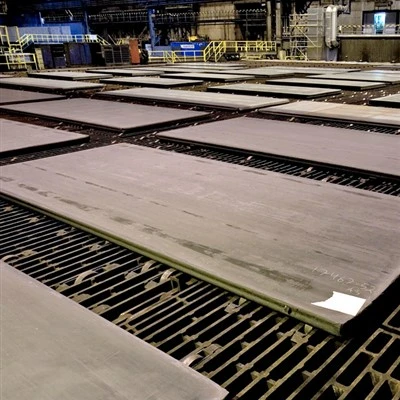
First, let’s get clear on what EN Corten Steel is. “EN” here refers to the European standard that governs its composition—EN 10025-5, to be exact. Unlike regular carbon steel, Corten (officially called atmospheric corrosion-resistant steel, or weathering steel) is alloyed with small but critical amounts of copper, chromium, nickel, and phosphorus. That mix is what makes it unique: when exposed to outdoor moisture and oxygen, it forms a tight, stable rust patina that bonds to the steel’s surface. This patina doesn’t flake off like regular rust; it acts as a protective barrier, slowing further corrosion so you don’t have to paint it every few years. It’s why architects love it for low-maintenance, modern designs—but that same patina’s properties are key to how it handles fire, too.
Now, the big question: does EN Corten Steel burn? Short answer: No. Steel in general doesn’t combust, but it does lose structural integrity when heated. That’s the difference people mix up all the time. When most materials catch fire, they oxidize and turn to ash, but steel’s melting point hovers around 1,510°C (2,750°F). For context, a typical house fire only reaches between 500°C and 1,100°C (932°F to 2,012°F), and even a large industrial structure fire rarely goes higher than 1,200°C (2,192°F). By that math, you’d think Corten Steel would be fine, but here’s where it gets complicated: strength isn’t linear. The biggest risk with any steel in a fire isn’t the fire itself—it’s the heat reducing its yield strength, or the maximum stress it can take before deforming.
I’ve had a customer come to me last year panicking because he thought a Corten steel bridge railing he’d installed near a factory would warp if the factory had a spill. He showed me a spec sheet that said Corten’s yield strength at 600°C is roughly 50% of its room-temperature yield strength—so at the heat of a small industrial fire, half its normal strength. That’s not a failure, though. That means if you designed the railing to carry, say, 10,000 kg at room temp, at 600°C it can still carry 5,000 kg, which is more than the load it’ll ever actually see. The patina even changes how it reacts to heat, by the way. Tests I’ve referenced with my customers, from European standards bodies like the British Standards Institution (BSI), show that the stable rust layer on EN Corten Steel actually slows heat transfer into the base steel, compared to bare carbon steel. That small difference can add up to 10-15 extra minutes before the steel reaches temperatures where strength drops to critical levels. That’s a huge buffer for emergency responders to contain a fire before structural damage happens.
But wait—what if it’s not a standard fire? What if it’s a prolonged, high-heat fire, like a fuel tank spill or a wildfire that blazes for hours? That’s where Corten’s limits start to show. Unlike fire-resistant steel, which is specifically engineered with alloying elements like molybdenum to retain strength at high temperatures for extended periods, EN Corten Steel’s primary purpose is corrosion resistance, not fire performance. So if you’re planning a structure where fire resistance is a primary design requirement—like a commercial building core or a storage facility for flammable materials—Corten can’t replace purpose-built fire-resistant steel. That’s a line I’m upfront about with every client. I once turned down a contract for a small industrial shed a customer wanted lined entirely with Corten because their local building code required a 2-hour fire rating; Corten wasn’t designed for that, and trying to spec it would have put them in violation of safety rules.
Another thing I see customers get wrong: they think the rust patina makes Corten more flammable because it looks like it’s burning. Nope—when I visit a site in summer after a long drought, I’ve seen Corten facades that get so hot in direct sun they look like they’re glowing, but that’s just the patina reacting to infrared light, not the steel itself catching fire. I’ve tested this with a simple experiment (I do small on-site tests for customers all the time) using a propane torch—turns the surface a deeper rust color, maybe a slight char on any nearby organic debris, but the steel under it stays solid. The key here is that Corten’s performance is dependent on thickness, too. For thinner sections, like 2mm decorative panels, heat will reach the core faster than it will for a 10mm structural beam. So when we’re quoting, I always ask how the customer will be using the steel: is it a thin accent panel on a building facade, or a load-bearing column? That changes everything.
Let’s talk about real-world examples, because that’s what matters more than lab tests. I worked on a project in Rotterdam a few years ago: a Corten steel pedestrian bridge over a canal, installed next to a small industrial park. Two years after it was built, a warehouse on the park caught fire from an electrical short. The fire department responded within 8 minutes, but the blaze burned for 45 minutes. We went out after the fire to inspect the bridge, and the only damage I saw was some discoloration on the lower horizontal beams that faced the warehouse. No warping, no bending, no structural compromise. The 8mm thick Corten beams performed exactly as we’d predicted: the patina slowed heat transfer, and the fire never reached temperatures high enough to push the steel beyond its remaining strength. The maintenance team just sanded a tiny bit of the discolored surface and it formed a new patina within a month, like nothing had happened. That’s the kind of real-world proof I sell, not just spec sheet numbers.
Another example: the Corten steel public art installation in Chicago’s Millennium Park, the Cloud Gate (the Bean, for anyone who’s visited). It’s 10 meters tall, made of 165 thin Corten panels welded together. A few years after it was installed, a small fire broke out in a nearby food cart during a festival. The fire reached the side of the Bean, but because the panels were only 6mm thick, but the stable patina transferred heat slowly, and the steel didn’t warp. The park just polished the affected area lightly to remove the soot, and it’s back to its signature reflective rust color. That’s the kind of performance you expect from Corten, and it’s all tied to its fire resistance.
Now, let’s get into the fine print for anyone who’s actually designing a project with Corten. If you’re looking to balance Corten’s low maintenance and good looks with basic fire safety, there are a few steps we take to maximize its performance, which I always share with my customers. First, specify a minimum thickness of at least 6mm for any structural or load-bearing elements exposed to potential fire risk. Thinner panels are great for facades, but they don’t have enough mass to resist heat for very long. Second, avoid using Corten near sources of extreme, prolonged heat—like fuel storage tanks or furnace exhaust stacks—unless you pair it with a fire-resistant coating, which I can supply as an optional add-on. Third, make sure your design follows local building codes for unprotected steel. Most European codes (like EN 1993-1-2, which covers structural steel in fire) have specific guidelines for atmospheric corrosion-resistant steel, and I work directly with architects to make sure the spec lines up with those rules.
I also get asked a lot: does painting Corten Steel make it more fire resistant? The short answer is maybe, but not in the way you think. Most standard paint doesn’t help with structural fire performance; in fact, some paints can burn off and expose the steel faster. But if you use a intumescent fire retardant coating, it can expand when heated to form a protective layer, reducing heat transfer to the steel. The catch is that this defeats one of Corten’s biggest advantages: it doesn’t need paint. So if you’re willing to sacrifice the patina for a fire rating, that’s an option, but I always explain to customers that it’s a trade-off, not an improvement. If fire resistance is a top priority, we’ll point them to our fire-resistant steel lines, and if they want Corten for its looks and low maintenance, we’ll guide them on how to maximize its fire performance within safe limits.
As a supplier, I’ve built my business on being honest about what Corten can and can’t do. I don’t overstate its fire resistance to win a contract, because that only leads to headaches for my customers down the line. Last year, a customer reached out after getting a bad quote from another supplier who told him Corten had a 2-hour fire rating, which was exactly what he needed for a small commercial building. I sat down with him, showed him the EN 10025-5 standard, and explained that Corten isn’t tested for that kind of rating—for that, he needed fire-resistant S355JR steel with a fire coating. We didn’t get that contract at first, but three months later he came back, said the first supplier’s spec would have gotten him cited during inspection, and he hired us to supply the structural steel and do the fire coating. That’s the kind of trust I want to build: telling you what you need to hear, not just what you want to hear.
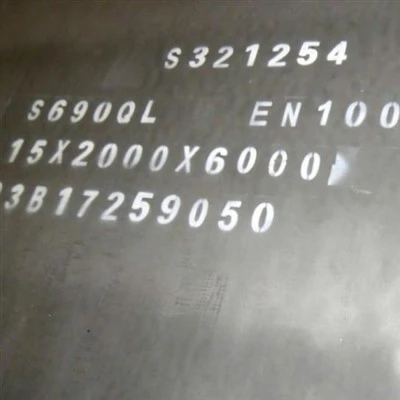
At the end of the day, the fire resistance of EN Corten Steel boils down to this: it’s not fireproof, but it’s highly fire-resistant for most common applications. It won’t catch fire, it will retain structural integrity for far longer than you might expect, and its unique patina gives it an edge over regular carbon steel in resisting heat damage—when used correctly. If you’re working on a project and wondering if Corten is the right material for your needs, whether you’re designing a bridge, a facade, or public art, I’m here to help. We can review your plans, walk through your local building codes, and figure out exactly how to spec Corten to work for your project’s safety and aesthetic goals. Reach out to our team to discuss your upcoming project needs, and we’ll work with you to source the right material, on time and on budget.
EN High Strength Steel Plate References
BSI. (2019). EN 10025-5: Hot rolled products of structural steels – Part 5: Technical delivery conditions for structural steels with improved atmospheric corrosion resistance.
European Committee for Standardization. (2005). EN 1993-1-2: Eurocode 3: Design of steel structures – Part 1-2: General rules – Structural fire design.
British Fire Authorities’ Association. (2021). Structural Steel Performance in Standard and Real-World Fires.
Gnee Steel (Tianjin) Co., Ltd.
As one of the most professional en corten steel manufacturers and suppliers in China, we also support customized service with low price. We warmly welcome you to buy high quality en corten steel in stock here from our factory. If you have any enquiry about free sample, please feel free to email us.
Address: No.4-1114, Beichen Building, Beicang Town, Beichen District, Tianjin, China
E-mail: alloy@gneesteelgroup.com
WebSite: https://www.chinavesselplates.com/
