Let’s talk about quartz countertops – one of the most requested questions we get as a quartz countertop supplier is this: Do they need to be sealed? I’ve had this conversation so many times with homeowners, contractors, and interior designers over the years, and I’ll be honest, there’s a lot of misinformation floating around about sealing natural stone vs. engineered quartz. Let’s break this down the way I explain it to every customer who walks through our showroom or sends an inquiry – straight, science-backed, and based on years of seeing how these surfaces hold up in real homes, not just marketing jargon. Quartz Countertop
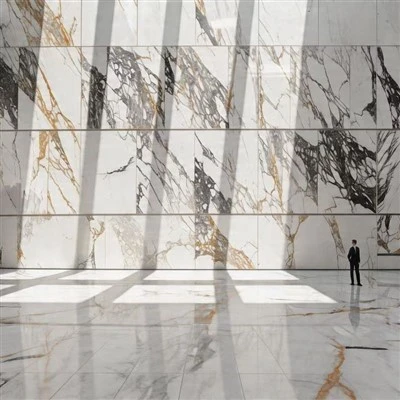
First, let’s get clear on what quartz countertops actually are, because that’s the foundation of the sealing question. Unlike natural stone like granite or marble, which is mined from the earth and has tiny, microscopic pores (that’s why they need sealing), quartz is an engineered material. We mix roughly 93% ground natural quartz crystals (the same hard mineral you find in rock formations) with 7% polymer resins, pigments, and binders. The result is a non-porous, solid surface – no gaps, no tiny holes, no places where liquid can seep in and get trapped. That’s a key point most people miss when they’re comparing quartz to other countertop materials.
I still remember a few years back, a contractor brought in a customer who’d just had granite countertops installed and was told by their old handyman that all stone countertops need sealing every year. They called us panicking because they’d just had our quartz surfaces installed in their new kitchen, and they thought they’d made a mistake, that they’d have to tear them out and start over with granite. When I showed them the science behind quartz’s non-porous structure, they relaxed – but that moment stuck with me. A lot of the confusion around sealing quartz comes from mixing up engineered stone with natural stone, and that’s something we try to clear up early for every client.
So let’s get to the core: do quartz countertops need sealing? The short answer is, no – not regularly, not at all, almost never. The polymer resin binders used in manufacturing quartz create a seamless, non-absorbent barrier. Spills like red wine, coffee, olive oil, or citrus juice don’t penetrate the surface; they just sit on top, and a quick wipe with a mild soap and water cloth takes care of them. I’ve seen our quartz countertops hold up to months of heavy use in showrooms – we’ve had ketchup, nail polish, even paint spills on sample pieces, and a little scrubbing removes every trace. That’s not to say quartz is indestructible (it can scratch if you drag sharp knives across it, and it can stain if you leave certain harsh, acidic substances sitting on it for weeks), but sealing isn’t part of the care routine for a properly manufactured quartz countertop.
Wait a second – I know what some of you are thinking. I’ve seen a handful of countertop sealant brands online that claim to work on quartz, or contractors who will offer to seal quartz during installation for an extra fee. Let me be clear about that. Some of those sealant products are specifically formulated for engineered stone, but they’re almost always unnecessary for standard quartz countertops. The reason some might suggest it is either outdated knowledge (from when quartz formulas used to have more porous binders, which hasn’t been the case for at least 15 years), or just a sales tactic to add an extra service line. At our company, we test every batch of quartz we carry – we spill everything from red wine to cooking oil on sample pieces and leave them for 24 hours, then wipe them clean. No stains, no absorption, no need for a sealer.
That said, there’s one small caveat here, and it’s important to mention because it’s a scenario we actually run into occasionally. If a quartz countertop has a seam – the line where two slabs are joined during installation – that seam is filled with a specialized quartz filler and resin to match the surface. In some cases, especially if the seam isn’t polished and sealed properly during installation, that tiny filler line could be slightly more porous than the rest of the quartz surface. A good installer will polish that seam until it’s smooth and seamless, so it’s indistinguishable from the rest of the countertop. But if the seam is rough or poorly finished, a contractor might recommend a thin layer of sealant only on the seam, not the entire countertop. That’s a rare exception, not a general rule for all quartz countertops. I always advise customers to work with an experienced installer who specializes in quartz, because a bad seam job is the only real weak point when it comes to absorption.
Another common myth I hear: “Quartz is too synthetic, it doesn’t look real.” But we’re not here to talk about aesthetics – we’re here about practical care, and that practicality is why quartz has grown so much in popularity over the last decade. I’ve had customers switch from granite to quartz because their last granite countertop required sealing twice a year, and they hated the hassle of remembering to buy sealer, reapply it, and wait for it to cure before they could use their kitchen. With quartz, you never have to think about sealing it. You don’t have to strip old sealant, wait 24 hours after sealing before hosting a dinner party, or worry about spilling wine the night before a big event and ruining your countertop. That peace of mind is a huge selling point, and it’s all tied back to that engineered, non-porous structure.
Let’s compare that to natural stone, just to put it in perspective. My cousin had marble countertops in his old home, and he spent every six months sealing them, once spilled a whole bottle of balsamic vinegar that left a permanent stain, and he had to replace a section of the marble after a few years because of ething from acidic foods. Granite is a bit more durable than marble, but it still needs sealing every 1-5 years, depending on the type, and it’s still porous enough that deep seepage can cause stains. Quartz? We had a customer last year who spilled a whole pot of spaghetti sauce on her quartz countertop, left it there for 3 days because she was away on vacation, and when she got home, she wiped it off and there was no stain at all. That’s the kind of performance our customers come to expect, and sealing is never part of that story.
Now, I want to address one more thing: not all quartz is the same. As a supplier, we work with manufacturers that use high-quality, food-grade polymer resins and 93% quartz crystals, but some cheaper quartz brands might use lower-grade resins that are more porous. That’s why when we talk about quartz not needing sealing, we’re talking about standard, properly manufactured engineered quartz countertops. If you buy a super cheap quartz from a big-box store that’s not tested for non-porosity, it’s possible that it could absorb liquids – but that’s not a quality quartz product. We test every slab we bring into our warehouse, and we stand behind the quartz we supply, which is why we don’t recommend sealing for any of our products.
So what should you do to care for your quartz countertops, if sealing isn’t needed? It’s way simpler than caring for natural stone. We always tell customers three key things: first, wipe up spills as soon as you can, even though they won’t stain, it’s just good practice for keeping your countertop looking clean. Second, use cutting boards – quartz is scratch-resistant, not scratch-proof, so dragging sharp knives across the surface can leave small marks over time. Third, avoid placing hot pans directly on the countertop, just like you would with most surfaces – even though quartz is heat-resistant up to a certain temperature, extreme heat can cause damage over time. That’s it. No special cleaners, no sealers, no annual maintenance. Just mild soap and water or a non-abrasive countertop cleaner, and you’re good to go.
I’ve been in the quartz countertop business for over 12 years now, and I’ve seen every question, every doubt, every horror story from people who picked the wrong countertop material. The question about sealing quartz is one of the most common, and it’s also one of the most straightforward once you understand the science. The bottom line is: quartz countertops are engineered to be non-porous, so they don’t require sealing to protect them from stains, moisture, or damage. The myth that they need to be sealed comes from confusing engineered stone with natural stone, outdated manufacturing practices, or sales tactics from companies that make money selling sealants.
At our company, we don’t push unnecessary services on our customers. We supply high-quality quartz countertops, and we give honest, science-backed advice on how to care for them. If you’re in the market for new countertops, or you have questions about quartz vs. other materials, we’re here to help. Whether you’re a homeowner planning a kitchen remodel, a contractor working on a new build, or a designer sourcing materials for a project, we can walk you through the options, show you samples, and answer any questions you have about care, durability, or installation.
We know that choosing countertops is a big decision – they’re one of the most used surfaces in your home, they set the tone for your kitchen or bathroom, and they’re a significant investment. That’s why we take the time to explain the facts, cut through the noise, and make sure you have all the information you need to make the right choice for your space. If you’re ready to learn more about our quartz countertops, or if you have questions about sealing, care, or pricing, we encourage you to reach out to our team to discuss your project. We work with clients across the area, and we’re committed to providing high-quality products and reliable service every step of the way.
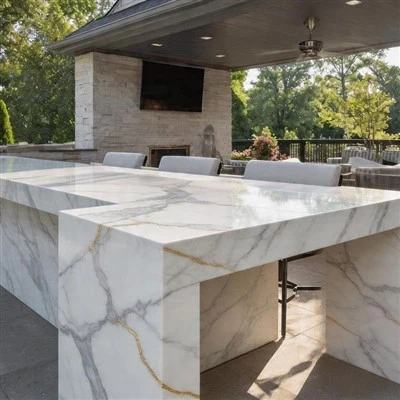
When it comes to quartz countertops, sealing isn’t just unnecessary – it’s a waste of time and money. The engineered structure that makes quartz so popular also eliminates the need for regular sealing, giving you a durable, low-maintenance surface that will look great for years to come. Don’t let the myths about sealing quartz steer you wrong; trust the science, trust the experience, and choose quartz for a countertop that works as hard as you do.
Outdoor Quartz References
- Quartz Surface Properties and Care, Natural Stone Institute, 2022
- Engineered Stone Composition and Performance, International Masonry Institute, 2021
- Countertop Material Porosity Testing, Journal of Building Materials, 2020
- Residential Countertop Maintenance Best Practices, National Kitchen & Bath Association, 2023
Wuhu Junde New Material Technology Co., Ltd.
As one of the most experienced quartz countertop manufacturers and suppliers in China since 1998, we warmly welcome you to wholesale top-quality quartz countertop made in China here from our factory. If you have any enquiry about cooperation, please feel free to email us.
Address: No.8 Yulin Road, Xinwu Economic Development Zone, Anhui Province, China
E-mail: 1127319898@qq.com
WebSite: https://www.jundequartz.com/
