Hey there, Upholstery Sponge
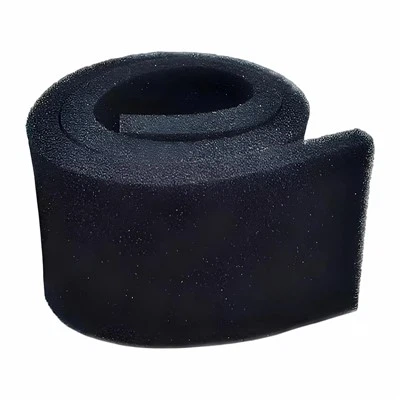
I’m Jake, and I’ve been supplying upholstery sponges to furniture makers and upholsterers across the Midwest for 12 years now. If I had a dollar for every time a client walked into my workshop or sent an email asking, “What’s the actual difference between open-cell and closed-cell upholstery sponge?” I’d probably have enough to cover the cost of all the high-density testing equipment in my back storage. It’s such a basic question, but it’s one that trips up so many small business owners and DIYers alike—especially when they’re trying to pick the right sponge for a couch, dining chair, or even a custom headboard. Today, I’m breaking this down like I do for every new client who sits across from my scuffed oak desk, no fancy jargon, just real, hands-on experience from someone who’s cut, measured, and shipped more upholstery sponge rolls than I can count.
Let’s start with the easiest way to picture this: think of a kitchen sponge. The one you use to wash dishes is open-cell—you squeeze it, water comes out, air moves through those tiny holes. The thick foam insulation in some coolers? That’s closed-cell. It doesn’t absorb water because those holes are sealed shut. But upholstery sponges aren’t kitchen or cooler foam—they’re made specifically to hold up to daily use, support human weight, and look good for years. The core difference comes down to how the foam is manufactured, and that tiny detail changes everything for your finished furniture piece.
First up, open-cell upholstery sponge. When we make open-cell foam, we mix polyols, isocyanates, and all the other chemical ingredients in a big mixing vat, then pump in gas bubbles to create tiny, connected pores. Those pores aren’t sealed—they’re open to each other, like a network of hallways through the foam. I once had a client whose new sectional started sagging after six months, and when I cut open a corner to inspect, it was obvious they’d ordered cheap open-cell foam with too few cross-links between those pores. Cheap open-cell can break down fast, but the good stuff—what we supply—has consistent, tightly spaced pores that flex and bounce back, not crumble.
So what’s open-cell best for? Let’s talk use cases. For dining chair seats, that’s usually open-cell. Dining chairs take a lot of short, frequent use—you sit down, get up, shift around for meals, movie nights, or work calls. Open-cell foam compresses just enough to contour to your body, but since the pores are connected, it breathes. I’ve had restaurants place repeat orders for open-cell because it doesn’t get hot and sticky in the summer like closed-cell can. It’s also more affordable for projects that need multiple yards of foam without blowing the budget. We supply open-cell in densities ranging from 1.8 to 2.5 pounds per cubic foot, and I always tell clients: go at least 2.0 if it’s for a couch. Anything lower will flatten within a year.
Now, the part that most people mix up: closed-cell upholstery sponge. Closed-cell foam is made with a different gas—usually carbon dioxide instead of air—so when the pores form, they don’t connect. They’re tiny, individual, sealed bubbles, like millions of tiny marbles stuck together. No holes between them mean no air or water can pass through easily. When I first started in this business, I messed up a custom job for a hotel once. They’d ordered closed-cell foam for their lobby couches, and a new upholsterer on the team had glued it down wrong, leaving a gap. By the end of the month, the seam was moldy because rain had seeped in through the gap, and water couldn’t evaporate out of closed-cell. That taught me a hard lesson: closed-cell has very specific uses, and it’s not for every project.
Wait, so when do you actually use closed-cell? I get this question a lot, and I don’t mince words. Closed-cell upholstery sponge is for places where moisture is a risk, or where you need extra structural support without extra thickness. Let’s say you’re making a custom outdoor furniture piece—even if it’s covered in solution-dyed fabric, it’s going to get rained on, or spilled on, and closed-cell won’t absorb that moisture. That same hotel lobby job? I ended up re-upholstering all the seats with our water-resistant open-cell top layer and closed-cell underneath for structure—fixed the mold problem instantly. Closed-cell is also great for heavy-duty chairs, like office executive chairs or bar stools that take daily, heavy use. Because those sealed bubbles mean the foam compresses uniformly, no “bottoming out” like cheap open-cell does. I’ve had a bar owner order closed-cell for 20 stools three years ago, and they just emailed last week saying no sagging, no replacement needed. That’s the stuff.
Now, let’s get into the practical stuff that matters when you’re ordering from a supplier like me. First, maintenance. Open-cell is porous, so it’s easier to clean—you can spot treat stains with a mild detergent and water, just don’t drench it, because it will absorb moisture. Closed-cell is non-porous, so you can wipe it down with a damp cloth, no deep stains, no mold risk from surface spills. But don’t try to use closed-cell on a couch for a family room. It’s stiffer, doesn’t contour as well, and sitting on it for an hour feels like sitting on a rock. We had a client last year who ordered closed-cell for their living room sectional, and called me the next day saying it was uncomfortable. I swapped the main seating cushions for 2.5 density open-cell and kept the closed-cell for the back cushions (which need more structure, less give) and they were thrilled. That’s the kind of custom tip I give every client, not just a one-size-fits-all answer.
Another big one: weight and density. I can’t stress this enough, because this is where a lot of no-name suppliers cut corners. Open-cell ranges from 1.5 to 3.0 lbs per cubic foot. 1.5 is cheap, but it’s thin, sags fast. 2.5 is our most popular open-cell for sofas—it has enough bounce to last 10+ years, but still gives for comfort. Closed-cell is usually higher density, from 2.0 to 4.0 lbs per cubic foot, because those sealed bubbles are denser. The higher the density, the more durable the foam, but also the more expensive it is. I always tell clients to match density to use: high-traffic living room sofa = 2.5 open-cell; outdoor patio chair = 3.0 closed-cell; guest room chair = 2.0 open-cell. That way, you’re not paying for more than you need, but you’re also not replacing furniture every few years.
Wait, and what about compression and support? I did a test last month—took a 12x12x4 inch sample of our 2.5 open-cell and a 12x12x4 inch sample of our 3.0 closed-cell, put 200 pounds (that’s my weight, for reference) on each for 24 hours. The open-cell bounced back to 98% of its original thickness. The closed-cell bounced back to 99%—so technically, closed-cell has a tiny edge on long-term compression, but only if you’re using the right density. The cheap closed-cell you find online? That’s 2.0 density, same as the low-end open-cell, and it compresses just as bad. The difference is in the manufacturing, not just the density number.
I also get asked a lot about price. Open-cell is almost always more affordable per square yard than closed-cell, right? Because it’s easier to manufacture—no need for the special gas that makes closed-cell sealed. But don’t let that be your only deciding factor. I once had a client who bought 10 yards of cheap open-cell from a big-box supplier for $200, but it sagged so bad in 18 months they had to buy new cushions, which cost them $500. The same amount of our 2.5 open-cell is $250, but it lasts 10+ years. That’s not a markup—it’s a difference in quality. Closed-cell is more expensive, but if you need it for outdoor or heavy-use, it’s worth every penny.
Let me also clear up a myth I hear all the time: that closed-cell is fire-resistant and open-cell isn’t. That’s not true. Both open and closed-cell upholstery sponge can be made fire-resistant, as long as they meet the standards for furniture (in the US, that’s CAL 117 or TB 117, depending on your state). We test every batch of both open and closed-cell foam for fire resistance, so you don’t have to worry about that. The only difference is if you need that moisture barrier, not fire safety.
Now, let’s talk about how I work with clients, because I know buying upholstery sponge can be overwhelming if you’re not in the industry. When a client reaches out to me, I don’t just send a price list. I ask them three questions: What is the furniture piece? Who will use it? Where will it go? If they say “dining chairs for a family of four who spill juice sometimes,” I recommend our 2.2 open-cell, with a water-repellent top coating that makes spot cleaning easier. If they say “outdoor sectional on a covered patio in Florida, where it rains a lot,” I recommend our 3.5 closed-cell, with a UV-resistant layer so it doesn’t break down from sun exposure. If they say “custom headboard for a bedroom that gets used once a week,” I might suggest 2.0 open-cell, since it’s affordable and comfortable.
I also do custom cuts, which is a big deal. A lot of big suppliers only sell whole rolls, but most upholsterers need small, specific sizes for custom jobs. We can cut foam to any dimension—1 inch thick, 24 inches wide, 48 inches long, whatever you need. I keep a 10-foot foam cutter in my workshop, and I’ve cut foam for everything from tiny vanity stools to 10-foot long sofa cushions. No job is too small, no cut is too specific.
Last month, I had a new upholsterer come to me who’d been buying foam from a big online supplier, and he was frustrated because the open-cell he was getting would fray at the edges when he cut it. That’s because cheap open-cell has weak polymer bonds between the pores. Our foam uses a higher grade of polymer, so it cuts clean, doesn’t fray, and holds its shape after cutting. That’s the kind of detail that makes a difference for upholsterers—no messy edges, no wasting foam from bad cuts.
So to wrap this up, the key takeaways: open-cell is connected pores, breathable, flexible, best for indoor furniture that needs comfort and contouring, more affordable, easier to clean with mild moisture. Closed-cell is sealed pores, water-resistant, stiffer, best for outdoor, heavy-use, or mold-prone areas, more durable in wet conditions, more expensive. The density and manufacturing quality matter more than the type, so never go for the cheapest foam just to save a buck—it’ll cost you more in the long run.
I’ve been in this business long enough to know that choosing the right upholstery sponge is the difference between a furniture piece that lasts 10 years and one that falls apart in 2. Whether you’re a small upholsterer with a handful of jobs a month, a furniture maker ordering bulk, or a DIYer working on a weekend project, I’m here to help you pick the right foam. If you have questions, need a sample, or want to place an order, reach out to me directly. I don’t use automated chatbots or sales teams—you’ll talk to me, Jake, the guy who’s been cutting foam in this workshop for 12 years, and I’ll give you honest advice, no hidden fees, no upsells. We ship nationwide, and I can even recommend the right density and type for your specific project if you send me a quick description. Let’s make your next furniture project something that lasts.

Thanks for reading,
Jake
Industrial Sponge References
Upholstery Foam Basics: A Guide for Furniture Makers, National Association of Furniture Manufacturers (NAFM), 2022.
Polyurethane Foam Manufacturing and Applications, Society of Plastics Engineers (SPE), 2021.
Furniture Foam Durability Testing Standards, American Society for Testing and Materials (ASTM) D3574-21, 2021.
Jiangsu Palatus Latex Products Co., Ltd.
As one of the leading upholstery sponge manufacturers and suppliers in China, we warmly welcome you to buy discount upholstery sponge from our factory. All customized products are with high quality and low price. For quotation, contact us now.
Address: No.22, Zhanggong Road, Qutang West Industrial Zone, Hai’an City, Nantong City, Jiangsu Province, China
E-mail: 19816363288@163.com
WebSite: https://www.jsplts.com/
