If you’ve ever stood in the middle of a 2am stock count, staring at a warm reach-in fridge holding $10k worth of perishables, you’ve probably asked the same question: “Can a commercial refrigeration unit be repaired, or do I need to drop $15k on a whole new unit right now?” As someone who’s been supplying commercial refrigeration units to cafes, grocery stores, and restaurants for over 12 years, I hear this at least three times a week—so let’s cut through the confusing industry jargon and break this down straight. Spoiler: 9 times out of 10, you don’t need to replace the whole thing. But there are a few big catches most contractors won’t tell you about, and they’re the difference between a $200 fix and a $12k regret. Commercial Refrigeration Unit

First off, let’s get one thing straight: commercial refrigeration is not your home fridge. Your at-home unit’s tiny compressor and thin coils are built to run 8-10 hours a day tops, no heavy load. Commercial units? They’re designed to run 24/7, 365 days a year. That means wear and tear is inevitable, but almost all of the common issues are fixable—if you catch them early. I’ll walk through the most frequent problems I see, plus the red flags that mean it’s actually time to upgrade, not repair.
Let’s start with the stuff that’s super easy to fix, and most people ignore until it’s too late. The #1 complaint we get from customers is “my fridge is running nonstop, and it’s way too loud.” Nine times out of 10, that’s not a dead compressor—that’s a dirty condenser coil. Those coils sit on the back or bottom of your unit, and over time dust, food gunk, and even loose floor debris build up and block air flow. When air can’t move through the coils, the unit has to work twice as hard to keep cool, driving up your electric bill and shortening every part’s lifespan. Last quarter, I had a small coffee shop customer call us panicking because their 3-door prep fridge (the kind they use for sandwiches) was making this terrible grinding noise and running all day. Their repair tech wanted to swap the compressor for $8k, but we sent our service guy to check the coils—turns out they were caked with old oat milk and pastry crumbs. 20 minutes with a coil brush, a vacuum, and a little compressed air, and that fridge went back to normal. Total cost? $150 for the service call. No replacement parts needed. That’s the kind of win we live for.
Next up: refrigerant leaks. This is probably the most misunderstood part of commercial refrigeration, and the one that gives people anxiety. Refrigerant is the stuff that cools the air, right? If there’s a leak, the pressure drops, and the unit can’t get cold. Now, here’s the key: not all leaks are created equal. A tiny pinhole leak in a line from years of vibration? That’s an easy fix. We’ve done dozens of those, especially in line sets between a walk-in cooler and its condenser. But if you’ve got a leak in the compressor itself, or a crack in the evaporator coil (the big metal box inside the fridge that holds the cool air)? That’s where it gets tricky. Wait—before you panic, let’s be real: most contractors will tell you any refrigerant leak means you need a new unit, but that’s not true. As long as the coil is repairable (no massive corrosion, no multiple leaks all over), we can weld it, pressure test it, and refill the refrigerant for way less than a new unit. Last year, a local grocery store had a leak in their 10-year-old display case coil. We fixed the coil for $2,200, compared to a new display case that would have been $14k. That’s a no-brainer. The only time a refrigerant leak is a waste of money? If the unit is already 15+ years old, and we find out the leak is going to happen again in 1-2 years because the whole system is corroded all over. That’s when repair makes no sense.
Now, let’s talk about the parts that actually do go bad and can be swapped out, no full replacement needed. Compressors, evaporator fans, temperature control boards, door gaskets—all of these are replaceable on a commercial unit, same as your fridge, but they’re built to handle way more load. A common mistake we see is people trying to use cheap, off-brand parts to fix their unit, and that’s a huge mistake. I had a restaurant customer a while back who bought a $200 off-brand temperature board for their walk-in, instead of going with an OEM (original equipment manufacturer) part. Six months later, the board fried again, and took out the compressor with it. Total repair cost ended up being $7k, instead of the $1,200 an OEM board would’ve cost. Stick to parts that match what your unit was made for, and that repair will last. Also, don’t skip preventive maintenance—we offer quarterly checkups for all our clients, and 90% of the time, those checkups catch small issues before they become full-on breakdowns. Changing a door gasket for $150 is way better than replacing a compressor for $8k.
But here’s the stuff that means it’s probably time to upgrade, not repair, and it’s not just about age. First: if your unit is 15 years or older, and you’re already on your third or fourth major repair (compressor, coil, control board) in the last 2 years. The thing about old commercial refrigeration units is that parts get harder to find, and even when you do find them, they’re not built to the energy efficiency standards of new units. Back when your 15-year-old unit was made, energy costs were lower, and regulations weren’t as strict. New units use 30-50% less energy, which will save you way more in utility bills than the cost of a new unit over 5 years. Last year, I had a pizza place customer who was paying $1,200 a month to run their old walk-in, and spending $1,500 a year on repairs. We swapped them for a new energy-efficient walk-in, their monthly bill dropped to $650, and their repair costs went to almost zero. They were making money on the swap within 18 months, not losing it on constant fixes.
Another red flag: if your unit uses an old refrigerant like R22. R22 is the old chlorofluorocarbon refrigerant that’s being phased out globally because it’s bad for the ozone layer. The EPA banned production of new R22 in 2020, so what’s left is recycled, which means it’s super expensive—we’re talking $50 a pound, compared to $10 a pound for the new R410A or R134A. If you have a leak in an R22 system, fixing it will cost twice as much as fixing a new refrigerant system, and you’ll still be left with a unit that’s going to be even harder to service in 2 or 3 years. It’s almost always more cost-effective to upgrade here.
Wait, let’s also bust a common myth: some people think if the unit isn’t cooling at all, it’s dead. No—most of the time, that’s a tripped breaker, a blown fuse, or a bad start capacitor for the compressor. We get at least one call a week from a panicking operator who thinks their whole walk-in is ruined, turns out they just popped a circuit when they slammed the back door at 1am. Always check the simple, free stuff first: make sure the unit is plugged in, the breaker isn’t flipped, the temperature control is set correctly, and the door gaskets aren’t torn or sticky (a bad gasket lets warm air in, which makes the unit run nonstop and seem like it’s broken).
Now, let’s talk about what we do differently as a commercial refrigeration supplier—because I know a lot of contractors will push a full replacement when a repair works, and some will push a repair when an upgrade makes sense. For every unit we sell, we provide a free 10-point pre-install check, and for units our customers already own, we do a full diagnostic before we quote any work. We don’t upsell you on a new unit if a $300 compressor swap will get you another 5 years. But we also won’t waste your money on a $2k coil repair for a unit that’s on its last legs. Last month, we had a customer who called us to fix their 12-year-old display case. We did the diagnostic: the evaporator coil was leaking, but it was still in good shape, no major corrosion. We quoted them a $1,800 repair, but we also showed them a new energy-efficient display case for $10k, and broke down the math: they were paying $900 a month in electric for the old unit, $500 a month for the new one, so the new unit would pay for itself in 3 years. They went with the repair, and their electric bill dropped $200 a month right away, because cleaning the coils and tuning it up made it more efficient.
Here’s the biggest takeaway I want you to remember: commercial refrigeration repair is almost always possible, but it’s not always the right choice. The key is knowing the difference between a quick, cheap fix that will last 5 years, and a repair that’s just putting a band-aid on a unit that’s on its way out. The worst thing you can do is ignore small issues until they become big, expensive problems—and the second worst is listen to a contractor who only offers repairs or only offers replacements, no in-between.
If you’re dealing with a unit that’s acting up, or you’re just tired of guessing if your next repair is worth it, reach out to us. We can do a full, no-pressure diagnostic, lay out all your options (repair, tune-up, upgrade), and help you pick what makes sense for your business and your budget. No pushy sales stuff, no hidden fees, just straight talk about your refrigeration.
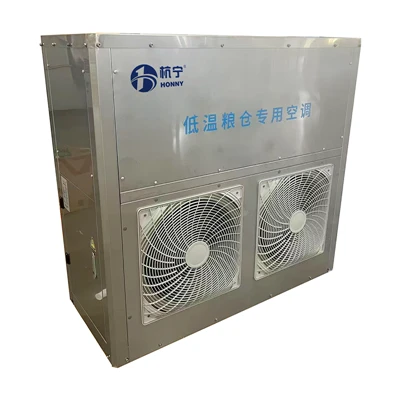
Wait, one last thing—don’t forget about regular maintenance. We can’t stress this enough. A $100 quarterly checkup is way cheaper than a $10k emergency compressor replacement, or losing an entire batch of produce because your unit decided to die on a busy weekend. We offer flexible maintenance plans for all types of businesses, from small cafes to large grocery chains, so you never have to stress about that 2am call again.
Commercial Water Heater References
Commercial Refrigeration: Maintenance and Troubleshooting Guidelines. American Society of Heating, Refrigerating and Air-Conditioning Engineers (ASHRAE). 2022.
Refrigerant Phase-Out and System Replacement Economics. U.S. Environmental Protection Agency (EPA) Ozone Layer Protection Program. 2021.
Energy Efficiency of Commercial Refrigeration Units. Department of Energy (DOE) Commercial Buildings Energy Consumption Survey (CBECS). 2020.
Hangzhou Honny Heat Energy Technology Co., Ltd.
We are one of the most experienced commercial refrigeration unit manufacturers and suppliers in China. With a professional production team, we are able to meet the needs of the majority of our customers. Please feel free to wholesale customized commercial refrigeration unit from our factory. Also, quotation is available.
Address: Dingshan Village, Wenyan Subdistrict, Xiaoshan District, Hangzhou City, Zhejiang Province
E-mail: 524435406@qq.com
WebSite: https://www.hnrnkj.com/
