If you’ve ever worked in heavy industry, construction, or material handling, you know how critical accurate force measurement is to keeping operations safe and reliable. At our load pin supply company, I talk to engineers, project managers, and maintenance teams every week who mix up dynamic and static load pins—costing them downtime, incorrect load data, or even safety risks. Today, I’m breaking down exactly what sets these two load pin types apart, based on years of working with both. Load Pins
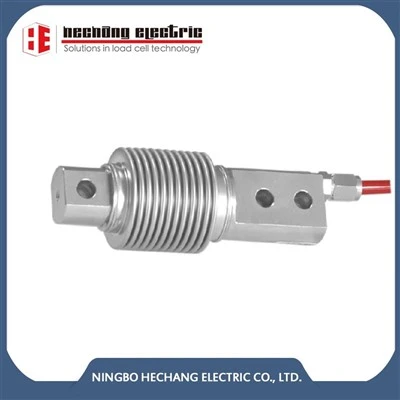
First, let’s get clear on what a load pin is, because some folks new to the field still mix them up with other force measurement tools. A load pin is essentially a specialized bolt or pin designed to fit directly into the load path of a structure or machine. Instead of measuring load through a separate sensor, it’s the load path itself. That makes it way more accurate for applications where space is tight or the load is applied directly to a connection point, like a crane’s lifting eye, a structural hinge, or a trailer’s axle pivot.
Now, static loads vs. dynamic loads. Let’s start with static loads because they’re simpler to grasp, but static load pins aren’t just “simpler” versions of dynamic ones. A static load is a force that doesn’t change in magnitude, direction, or location over time—at least not over the period you’re measuring it. Think of a bridge beam holding a truck parked in the same spot for hours, a crane holding a stationary 50-ton load mid-air, or a storage rack holding pallets that stay put for days. The force here is steady, no sudden changes, no vibration.
Static load pins are built for this steady state. Their core design focuses on measuring a constant deflection when a load is applied. Most use foil strain gauges glued to the pin’s surface, arranged in a Wheatstone bridge circuit to convert tiny amounts of deformation (strain, measured in microstrain) into an electrical signal that translates to load. Since there’s no rapid movement to account for, static load pins don’t need to handle high-frequency changes or fast data sampling. Many of our standard static load pin models are configured for general structural testing, permanent structural monitoring, or static lifting operations where accuracy is the top priority.
But here’s the big mistake I see: people try to use a static load pin for dynamic applications, and wonder why the data is all over the place. Dynamic loads are forces that change constantly—rapidly varying in magnitude, direction, or even location. Think of a crane lifting and swinging a load, a wind turbine’s tower twisting in gusts, a heavy-duty truck accelerating over a bump, or a factory’s conveyor belt moving parts up and down a slope. These loads aren’t steady; they fluctuate at hundreds or even thousands of times per second. A static load pin can’t keep up with that speed. Its strain gauge setup is tuned to measure slow, gradual changes, so it either misses peaks in the load or gives erratic readings that can’t be trusted.
Dynamic load pins are purpose-built for these fast-changing forces, and that’s where the real design differences kick in. Let’s break those down one by one, because knowing these will help you pick the right pin for your job.
First, data sampling rate. A dynamic load pin needs to capture rapid load changes, so its electronics are calibrated for high-frequency sampling—often up to 10,000 samples per second or more. Static load pins, by contrast, might only sample a few times per second, which is more than enough for a steady load but useless for a swinging crane that goes from 0 to 60 tons in a single second.
Second, strain gauge construction. Dynamic applications cause not just axial strain, but also shear strain, vibration, and shock—forces that can throw off static strain readings. Dynamic load pins use more specialized strain gauge configurations, often full Wheatstone bridges that cancel out cross-talk (unwanted strain from shear or torsion) and are sealed to withstand high shock and vibration. Some even use ruggedized foil gauges or bonded gauges that can handle repeated dynamic stress without degrading, since dynamic loads cycle thousands of times a day, every day. Static load pins use simpler gauge setups, often with lower sealing requirements because they’re not exposed to constant vibration.
Third, fatigue resistance. This is a huge one I almost missed. A crane lifting a load 10 times a minute isn’t just applying a load—it’s cycling that load on and off thousands of times over months. A static load pin, designed for steady, non-cyclic loads, might fail prematurely under that kind of repetitive stress. Dynamic load pins are made from higher-grade materials—usually heat-treated alloy steel, instead of the standard carbon steel we use for many static load pins—and undergo fatigue testing to ensure they can handle millions of load cycles without losing accuracy or breaking. We recently had a customer who used a static load pin on a mobile crane; after 6 months of daily lifts, the pin’s strain gauge had delaminated from repeated stress, leading to a load reading that was off by 15 tons. They had to shut down operations while we swapped it out, costing them tens of thousands in downtime. That’s exactly why matching the pin type to the load type isn’t trivial.
Fourth, environmental sealing and IP ratings. Both static and dynamic load pins need to handle rough conditions, but dynamic ones are often used in more extreme, outdoor environments with constant movement. A static load pin for a indoor structural test might have an IP65 seal, but a dynamic load pin for an offshore crane or mining conveyor needs an IP68 rating, resistant to water, dust, and even extreme temperatures that would warp its calibration. That’s not just extra protection—dynamic loads combined with environmental factors can create additional strain that a pin not rated for those conditions will mismeasure.
Now, let’s talk about calibration, because that’s where a lot of people go wrong. Static load pins are calibrated under static conditions—applying a known, steady load in a controlled lab to map strain to load values. That works perfectly for static applications, but if you calibrate a dynamic load pin statically, it will give incorrect readings during dynamic operation. Dynamic load pins are calibrated under dynamic conditions, using specialized equipment that simulates rapid load changes, to ensure the signal accurately follows those fast shifts. I can’t tell you how many times a customer has brought us a load pin that they thought was “broken” because they calibrated it statically and it failed dynamic testing. That’s not a broken pin—it’s the wrong calibration for the job.
Let’s go over some real-world examples to make this concrete, because theory is great, but actual use cases drive the difference. If you’re a bridge engineer installing a load pin to monitor the weight of traffic on a new overpass, that’s a static application. Traffic might move, but the load on the pin at any given spot on the bridge is mostly steady (a car or truck stays in place long enough for the pin to measure it). A static load pin is perfect here—its high accuracy for steady loads will let you track if the bridge is experiencing unusual strain over time.
If you’re a wind turbine technician installing load pins on the turbine’s blade roots and tower base, that’s dynamic. The wind is constantly shifting, the blades spin every few seconds, and the load on the pins changes with every gust, every rotation. A static load pin here would miss the peak loads that cause fatigue damage over time, or give an average reading that’s useless for monitoring structural health. A dynamic load pin’s high sampling rate and fatigue resistance will capture those dynamic loads, so you can see when the turbine is operating outside safe limits.
Another example: a construction company using a tower crane. When the crane is stationary, holding a load, a static load pin works fine for periodic checks. But when it’s lifting materials, swinging the load, and lowering them repeatedly, that’s dynamic. If your load pin only measures statically, you might not notice that sudden peak load from slamming the brake when swinging, which could lead to overloading the crane’s structure. We supply a lot of tower crane operators with dual-purpose load pins now—wait, is there such a thing? Actually, some manufacturers do make load pins that can handle both, but they’re a middle ground, not as accurate as purpose-built static or dynamic pins for their intended jobs. If you’re doing 90% static lifting and 10% dynamic, a dual-purpose pin might work, but if you’re 100% dynamic, splurge on a dedicated dynamic pin.
Now, let’s address common questions I get from customers. First: Can I use a dynamic load pin for static applications? Technically, yes, but it’s overkill. It’ll give accurate static readings, but you’re paying extra for features you don’t need—high sampling rate, fatigue resistance, heavy sealing—that you’ll never use. It’s like buying a sports car to drive to the grocery store; it works, but you’re wasting money.
Second: Can I use a static load pin for dynamic applications? Almost always, no. As I mentioned earlier, it’ll give erratic or missed peak load readings, which is a safety risk. Last year, a small construction company tried to save $500 by using a static load pin for their mobile crane, and the pin missed a peak load when a load shifted mid-swing. The crane’s lifting hook bent, no one was hurt, but they had to replace $20,000 worth of equipment and their insurance wouldn’t cover it because they used the wrong component. That’s a costly mistake that’s totally avoidable.
Third: How do I know which load pin I need? Start with how the load behaves during operation. Ask yourself: Does the load stay steady for 90%+ of the time? Is it changing rapidly (more than a few times per second) or cycling thousands of times a day? Will it be exposed to high shock, vibration, or extreme environments? If you’re still unsure, our team works with you to assess your application, not just sell you a random pin. We’ve helped customers switch from bad load pin setups to the right ones, saving them from downtime and safety risks.
Now, a quick note on maintenance, because that ties into the design difference. Static load pins need minimal maintenance—just periodic calibration checks every 1-2 years, as long as they’re in clean, indoor environments. Dynamic load pins need more frequent checks: sealing integrity tests every 6 months, calibration validation, and visual inspections for wear on the pin’s surface, since they’re under constant cyclic stress. That’s another cost factor to consider when choosing—dynamic load pins have higher maintenance needs, but they’re built to last in harsh, high-use environments, so they’ll save you money in replacement costs over time.
At our company, we don’t just sell load pins—we’ve been supplying them to heavy industry, construction, and manufacturing for over 15 years, so we’ve seen every mistake customers make when choosing between static and dynamic pins. Whether you’re monitoring a static structural load, lifting heavy materials with a crane, testing a wind turbine, or managing a mining conveyor, getting this difference right is the line between safe, accurate data and costly downtime, or worse, safety incidents.
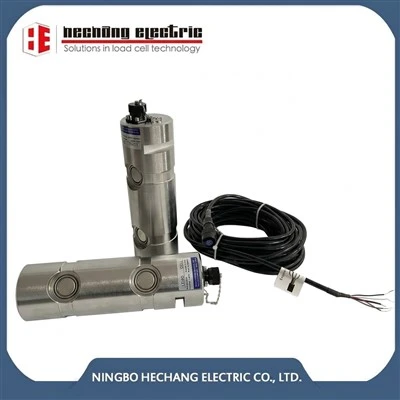
If you’re not sure which load pin is right for your application, or you need to replace an old pin that’s not working as expected, our team is here to help. We can walk you through your use case, answer any questions about load pin design and calibration, and guide you to the right solution for your needs. Reach out to our team to start a conversation and find the perfect load pin for your operations.
Livestock Weighing Scale References
- State-of-the-Art Load Measurement: Static vs. Dynamic Force Sensors. International Journal of Advanced Manufacturing Technology, vol. 87, no. 9-12, 2016, pp. 3115-3127.
- Fatigue Life Evaluation of Load Pins for Dynamic Lifting Applications. Journal of Construction Engineering and Management, vol. 142, no. 11, 2016, pp. 04016058.
- Force Sensor Calibration Methods: Static vs. Dynamic Standards. Sensor Review, vol. 34, no. 2, 2014, pp. 172-178.
Ningbo Hechang Electric Co., Ltd.
As one of the most professional load pins manufacturers and suppliers in China, we also support customized service. We warmly welcome you to buy advanced load pins for sale here from our factory. If you have any enquiry about cooperation, please feel free to email us.
Address: No.66 Yongmao West Road, Ningbo, China
E-mail: info@hcesensor.com
WebSite: https://www.hechangsensor.com/
